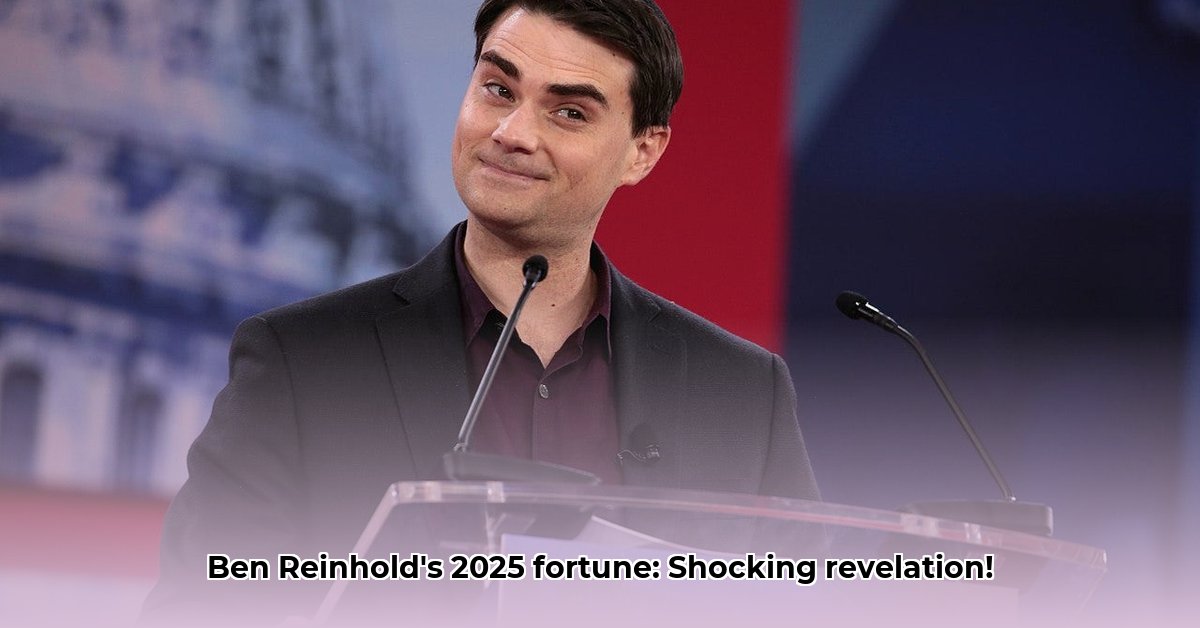
Decoding the 2025 Billionaire Landscape
The recently released 2025 Forbes list of billionaires offers a compelling lens through which to examine extreme wealth concentration. The list showcases a relatively small group of individuals possessing extraordinary fortunes, largely amassed within the technology, finance, and retail sectors. Analyzing Ben Reinhold's position—or absence—within this context provides crucial insights into global wealth distribution patterns. How did this concentration arise, and what are its implications for global economic stability and social equity? For more on high-net-worth taxation, see this resource.
The Challenges of Assessing Ben Reinhold's Net Worth
Precisely determining Ben Reinhold's net worth presents significant challenges. Variations in methodologies employed by different wealth tracking organizations, coupled with the inherent volatility of financial markets, contribute to discrepancies in reported figures. Furthermore, a substantial portion of ultra-high-net-worth individuals' assets often resides in illiquid investments, such as privately held companies or real estate, complicating accurate valuation. This inherent uncertainty underscores the limitations of any single net worth estimate. How can we effectively analyze wealth distribution when accurate data is so elusive?
Industry Dominance and Wealth Concentration
The 2025 Forbes list highlights a stark concentration of wealth within specific industries. The technology sector, particularly companies involved in artificial intelligence and social media, has emerged as a dominant force. Traditional powerhouses, such as finance and retail, maintain significant representation among the ultra-wealthy. This clustering suggests a powerful correlation between specific sectors and the accumulation of substantial fortunes. But does this reflect exceptional innovation and entrepreneurship, or systemic factors that favor the already wealthy?
Geographic Distribution of Billionaire Wealth
The geographical distribution of billionaire wealth further illuminates global power dynamics. While the United States, China, and Europe continue to dominate, the emergence of new players underscores a shifting global economic landscape. Understanding this geographical concentration is vital for policymakers seeking to address the impacts of wealth inequality on a global scale. What policies are needed to ensure a more equitable global distribution of wealth?
The Legacy of Wealth: Family Fortunes and Intergenerational Transfer
The persistence of numerous family fortunes on the Forbes list accentuates the role of inheritance in perpetuating wealth concentration across generations. This highlights a system where significant wealth accumulation is not solely a product of individual effort but also a consequence of inherited privilege. Does this system perpetuate inequality, hindering social mobility and economic opportunity for those without inherited wealth?
Ben Reinhold's Narrative: A Case Study in Wealth Accumulation
Ben Reinhold's net worth, as observed within the larger context of the 2025 Forbes list, serves as a valuable data point in understanding broader trends in wealth concentration. Whether he represents a newcomer or an established player, his individual narrative contributes significantly to the overall picture of wealth distribution and its consequences. What can his story teach us about wealth creation in the modern economy?
The Broader Implications of Extreme Wealth Inequality
The extreme concentration of wealth raises critical questions about social mobility, political influence, and the overall fairness of the global economic system. Such disparities significantly impact access to opportunities and resources for the less affluent segments of society, potentially reinforcing existing inequalities and hindering social cohesion.
Policy Responses: Addressing Wealth Inequality
Governments worldwide are likely to increase scrutiny of wealth concentration, leading to potential adjustments in tax codes, regulation, and enhanced transparency initiatives. These policy shifts aim to mitigate income inequality and address its social and economic repercussions. What specific policy interventions are most likely to be effective, and what are the potential trade-offs?
Fostering a More Equitable Future: Collective Action and Shared Prosperity
Addressing wealth inequality requires a collective commitment to promoting economic fairness and opportunity. Support for policies that encourage shared prosperity, both domestically and internationally, is crucial. The future of wealth distribution, and indeed Ben Reinhold's position within it, are dependent on collaborative actions to build a just global economic system. What role can individual citizens and organizations play in advancing this goal?